Anxiety And Phobia Workbook by Edmund J. Bourne
The most trusted step-by-step guide to overcoming anxiety, phobias, and panic — now revised and updated in its Seventh Edition with more than one million copies in print.
- Practical relaxation, exposure, and cognitive techniques in one workbook
- Covers panic, worry, specific phobias, nutrition, meditation, and relapse prevention
- Structured exercises you can begin using on the very first day
Explore the Anxiety and Phobia Workbook
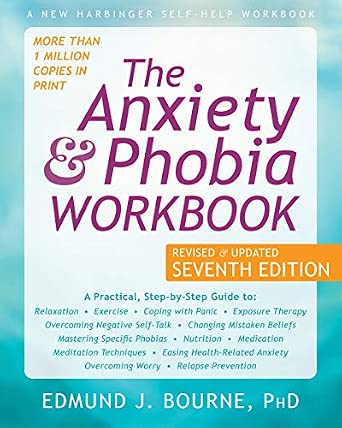
The Anxiety & Phobia Workbook — Seventh Edition
The fully revised flagship edition. A comprehensive self-help workbook covering relaxation, cognitive restructuring, exposure therapy, medication guidance, and relapse prevention — all in one practical resource.
Check Price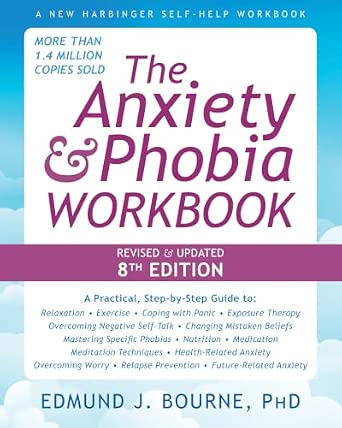
The Anxiety & Phobia Workbook — Companion Edition
An accessible companion volume from the same bestselling series, designed to complement the primary workbook with additional exercises and tools for managing anxiety day to day.
Check PriceInside the Anxiety and Phobia Workbook
Edmund J. Bourne, Ph.D., structured this workbook as a genuinely practical companion rather than a passive reading experience. Every chapter pairs clear explanation with ready-to-use exercises so readers can apply skills immediately.
Relaxation and Breathing
Progressive muscle relaxation, diaphragmatic breathing, and guided imagery techniques that reduce physiological arousal quickly.
Exposure Therapy
Step-by-step hierarchies for confronting feared situations at a manageable pace, including guidance for specific phobias and agoraphobia.
Cognitive Restructuring
Worksheets for identifying and challenging mistaken beliefs and negative self-talk that sustain anxiety cycles.
Medication and Lifestyle
Plain-language overviews of medication options alongside nutrition, exercise, and sleep guidance that support long-term recovery.
Relapse Prevention
Strategies for maintaining progress, recognizing early warning signs, and responding to setbacks without losing ground.
How to Read This Book
Use this five-step guide to review Anxiety And Phobia Workbook by Edmund J. Bourne and make an informed choice from the available product information.
Follow these five steps to get the most out of this evidence-based self-help program from the very first session.
- 01
Assess Your Anxiety Profile
Begin with the workbook’s self-assessment questionnaires to identify which anxiety patterns — generalized worry, panic, phobias, or social anxiety — are most relevant to your experience. This anchors your work in the chapters most likely to help you first.
- 02
Choose Your Starting Chapter
Rather than reading cover to cover, use your assessment results to select the chapter that addresses your primary concern. The workbook is intentionally modular — you can enter at relaxation, exposure, cognitive work, or lifestyle chapters depending on your needs.
- 03
Schedule Daily Practice Sessions
Consistency matters more than session length. Block out fifteen to thirty minutes each day for workbook exercises. Treating practice as a standing appointment — rather than fitting it in when anxiety peaks — builds the habit that drives lasting change.
- 04
Work Through Exercises Actively
Write directly in the worksheets, complete the exposure hierarchies on paper, and record your relaxation practice results. Active engagement with the structured exercises is what distinguishes this workbook from passive reading and accelerates skill acquisition.
- 05
Review Progress and Adjust
Every two weeks, revisit your initial self-assessment scores and compare them with your current responses. Use the workbook’s relapse-prevention chapter to consolidate gains, address emerging setbacks early, and decide which additional chapters to explore next.
Anxiety and Phobia Workbook Reviews: What Readers Say
With more than one million copies in print across seven editions, this workbook has earned a lasting reputation among readers managing anxiety, phobias, and panic.
Product quality
Readers consistently highlight how quickly the relaxation and breathing exercises produce noticeable relief. The structured format makes it easy to start on day one rather than having to read the entire book before finding something actionable.
— Reader feedback theme, self-help workbook category
Ease of use
Many readers describe this as the only anxiety book they need. The coverage of panic, phobias, cognitive techniques, nutrition, and meditation in a single volume is frequently cited as its greatest strength over narrower alternatives.
— Reader feedback theme, clinical self-help category
Overall experience
Long-term readers returning to updated editions note that Bourne continues to incorporate current research while preserving the approachable, step-by-step structure that made earlier editions so effective. Many therapists recommend it alongside professional treatment.
— Reader feedback theme, updated edition category
See the Workbook in Action
Watch this overview to understand how the Anxiety and Phobia Workbook structures its proven approach to managing anxiety and phobias.
About the Author
Edmund J. Bourne, Ph.D., has specialized in the treatment of anxiety disorders and related problems for over three decades. For many years, Bourne was director of the Anxiety Treatment Center in San Jose and Santa Rosa, California. His bestselling books have helped hundreds of thousands of people understand and manage their anxiety through evidence-based, practical approaches.
Dr. Bourne brings together cognitive-behavioral therapy, relaxation science, exposure techniques, and lifestyle research into workbooks designed for independent use — whether alongside professional treatment or as a primary self-help tool. The Anxiety and Phobia Workbook remains his best-known and most-referenced work, now in its seventh revised and updated edition.
Visit Official StoreFrequently Asked Questions
Who is the Anxiety and Phobia Workbook designed for?
The workbook is written for adults experiencing any form of anxiety — including generalized anxiety, panic disorder, agoraphobia, specific phobias, social anxiety, and health-related anxiety. It is suitable for self-directed use and is also widely recommended by therapists as a clinical supplement.
Do I need to read the workbook from beginning to end?
No. The workbook is structured modularly. The opening self-assessment guides you to the chapters most relevant to your anxiety profile, allowing you to focus on relaxation, exposure, cognitive work, or lifestyle chapters in whatever order suits your situation.
What makes the Seventh Edition different from earlier editions?
The Seventh Edition is fully revised and updated to incorporate current research and clinical practice. It expands coverage of mindfulness, meditation, and health-related anxiety while preserving the step-by-step structure readers have relied on across all previous editions.
Can this workbook replace professional therapy?
The workbook is a self-help resource, not a substitute for professional mental health treatment. Many readers use it successfully on their own, while others find it most effective when used alongside work with a licensed therapist. If your anxiety is severe or significantly impairs daily functioning, consulting a mental health professional is recommended.
How long does it take to see results from the workbook exercises?
Results vary by individual and the techniques being practiced. Many readers report noticeable reductions in anxiety symptoms within the first few weeks of consistent daily practice. Long-term benefits — particularly from exposure therapy — typically build over several months of sustained effort.